2026 How to Choose Solar Panel Roof Tiles?

Choosing solar panel roof tiles in 2026 means weighing appearance against energy output, roof condition, and long-term cost. These integrated products can create a cleaner roofline than conventional panels, but they may not suit every home. Their performance depends on the product, roof orientation, shading, local weather, and installation quality.

A useful comparison starts with the roof itself. Check its age, slope, usable area, and any shaded sections before requesting quotes. A chimney shadow across a small roof section can matter more than a glossy product image suggests. Small details matter. Ask installers for expected annual production, equipment specifications, warranty terms, and a clear breakdown of labor and related work. Compare those figures with standard panels, not just with another tile system. Costs and incentives vary by location, so confirm current details with qualified local professionals.

This guide explains how to assess efficiency, materials, durability, maintenance, and installer credentials. It also considers whether replacing an existing roof changes the value of an integrated system. Product ratings are useful, but they do not tell the whole story. A strong warranty cannot compensate for poor design, and the highest efficiency figure may not produce the best result on a shaded roof. I would be cautious about treating any single number as decisive. The goal is a well-matched system, supported by verifiable estimates and realistic expectations, rather than the most attractive brochure.
2026 How to Choose Solar Panel Roof Tiles?

Understanding How Solar Panel Roof Tiles Work

Solar roof tiles resemble conventional shingles, but each tile contains photovoltaic cells that convert daylight into direct-current electricity. The cells do not need blazing sun. They can generate power on cloudy days, though output usually falls. Not magic.

Wires beneath the roof connect groups of tiles to an inverter. The inverter changes direct current into alternating current for household circuits. A meter or monitoring system can show production, but readings vary with shade, roof direction, season, and dirt. A chimney shadow across a few tiles may matter more than expected. Tile layouts and electrical designs differ, so a qualified installer should assess the roof structure and system compatibility before work begins.

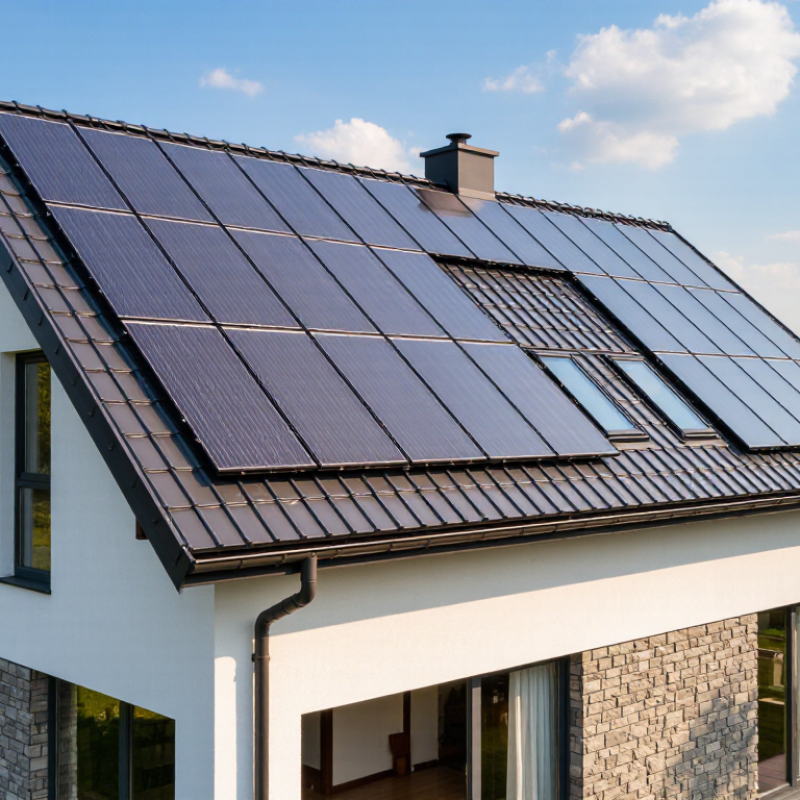
Unlike rack-mounted panels, solar tiles form part of the roof surface. This can create a cleaner appearance, yet it makes roof preparation and repairs especially important. Water must still drain correctly beneath and between the tiles. Ventilation matters too, because trapped heat can affect electrical output and roof materials. One detail is easy to overlook: replacing a damaged tile may involve both roofing and electrical work. Ask how wiring, flashing, and future access will be handled, and compare expected production with your actual roof conditions. Some estimates feel precise; weather is not.

2026 How to Choose Solar Panel Roof Tiles? — Understanding How Solar Panel Roof Tiles Work

Typical solar module conversion-efficiency ranges by technology

Solar roof tiles generate electricity through photovoltaic cells integrated into roofing materials. Their efficiency varies by design; compare the rated power, efficiency, roof coverage, and installation requirements of specific products. The ranges shown are indicative, and actual performance depends on product design and test conditions.

Assessing Roof Suitability for Solar Tiles

Before choosing solar roof tiles, check whether the roof can support them and suit their installation. A south-facing roof with clear midday sun may perform well, but orientation alone is not enough. Nearby chimneys, dormers, and tall trees can cast narrow shadows that reduce output. Watch the roof at different times of day. Small details matter.

Roof age and construction deserve equal attention. If shingles are already curling or a leak has stained the attic, repair or replacement may be needed before solar tiles go on. An installer should inspect the roof structure, rafters, ventilation, and underlayment, then confirm whether the added system is within the structure’s capacity. A steep or unusually shaped roof may require more cutting and careful waterproofing. That matters. A qualified structural professional can help verify load limits rather than relying on a visual guess.

Also consider how easy the roof is to access for installation and future repairs. Ask how flashing, wiring, and tile replacements will be handled, especially around valleys and roof edges. I used to think strong sunlight was the main test; it is only one part of the picture. A shaded, aging roof may look promising from the driveway, yet prove unsuitable after a closer inspection.

Comparing Tile Types, Efficiency, and System Capacity

Solar roof tiles blend into the roof, but their shape affects how much electricity they can produce. Flat, glass-faced tiles usually leave fewer gaps than deeply textured designs. Conventional roof-mounted panels often use roof space more efficiently, though they sit visibly above the surface. Check the product’s rated output and test data, not appearance alone. Looks can mislead.

Efficiency is only part of the comparison. A small tile may generate less power per unit than a larger panel, so a tile roof needs enough usable area to meet household demand. Dormers, chimneys, and afternoon shade can reduce that area quickly. Ask an installer to map shade across the roof and estimate annual production using local sunlight data. Estimates still have limits.

System capacity depends on the number of tiles that fit, their individual output, and the electrical system’s design. A roof with several slopes may need separate electrical inputs to manage different sun exposure. Compare the estimated kilowatt capacity with your typical electricity use, then allow room for seasonal variation. Also confirm that the roof structure and waterproofing details suit the added equipment. I have seen plans focus on appearance and overlook wiring routes; that detail can change the final layout.

Evaluating Costs, Incentives, and Warranty Coverage

Solar roof tiles can blend with shingles, but their installed cost depends on roof shape, flashing, electrical work, and tear-off. Berkeley Lab’s Tracking the Sun 2024 reports a median installed price of about $3.3 per watt for residential solar systems installed in 2023. That is a useful comparison, not a tile quote: the dataset mainly tracks conventional rooftop panels. Ask for itemized bids covering tiles, inverters, underlayment, labor, and any roof repairs. Compare cost per usable watt, not just the total price. A steep roof with several valleys can add labor quickly. Small details matter.

Incentives depend on location, project date, and current rules. Check official tax and utility guidance before counting a credit toward your budget; never rely only on a salesperson’s estimate. Warranty wording deserves the same scrutiny. Separate product, power-output, and workmanship coverage, then check who handles leaks, removal, and reinstallation during repairs. Look for exclusions around flashing, roof penetrations, and storm damage. The U.S. Department of Energy’s homeowner guidance recommends reviewing warranty terms and installer responsibilities before signing. Read the fine print. A long warranty sounds reassuring, but it may not cover labor or water damage. I would also keep the full warranty documents and installation photos; it is a small, unglamorous step that can help later.

Choosing an Installer and Planning the Installation

Choosing an installer for solar roof tiles takes more than comparing prices. Ask how many similar roof-integrated systems the crew has completed, and request references you can contact. Check that the installer is properly qualified and insured for the work in your area. A site visit matters. The assessor should inspect roof framing, underlayment, drainage, electrical service, and nearby shade—not just measure the roof from the driveway.

Ask for a written scope that explains tile removal, flashing details, wiring routes, inspections, cleanup, and who handles any roof repairs. Confirm what the workmanship and product warranties cover, and who you contact if a leak appears. Compare quotes line by line. A low price can leave out scaffolding or repairs. That is easy to miss.

Plan the installation around roof condition and household routines. If the roof needs repairs soon, discuss doing them before the solar tiles go on; removing finished work later can add cost. Ask how long the home may have limited power, where materials will be stored, and how the crew will protect gardens and walkways. Leave time for local approvals and utility coordination. Weather can shift the schedule. I would not assume the first estimate captures every complication; hidden damage sometimes appears only after old roofing is lifted.

2026 How to Choose Solar Panel Roof Tiles? - Choosing an Installer and Planning the Installation
Planning dimension What to check Questions for the installer Useful evidence
Installer qualifications Confirm the contractor meets local licensing, electrical-work, building-code, and permitting requirements. Requirements vary by location. Who is responsible for the roof, electrical, and permit work? Can you provide current qualifications and proof of insurance? Current credentials, insurance documents, written scope, and references for completed roof-integrated solar projects.
Roof condition and structure Assess roof age, deck condition, framing, moisture damage, and whether repairs or reinforcement are needed before installation. Will you inspect the roof structure? Which repairs are recommended, and who will complete them before the solar tiles are installed? Written site assessment, photographs, structural review where required, and a separately itemized repair scope.
Tile and roof compatibility Check that the proposed system suits the roof pitch, layout, roof covering, drainage details, and local weather exposure. Compatibility limits depend on the specific system. Does the system fit this roof design? How will valleys, ridges, edges, penetrations, and transitions to non-solar roofing be finished? Product installation requirements, roof layout drawing, flashing details, and confirmation of applicable wind, snow, and fire ratings.
Energy estimate and layout Review usable roof area, orientation, slope, shading, system losses, and household electricity use. Production estimates are site-specific, not guarantees. What assumptions are used for shading and energy production? How does the design account for vents, chimneys, and future roof access? Annotated roof plan, stated estimate assumptions, expected production range, and comparison with utility-bill usage.
Permits and utility connection Identify required building and electrical approvals, inspections, utility applications, and any local planning or heritage restrictions. Which applications and inspections are included? Who obtains utility approval, and when may the system be switched on? Permit and interconnection checklist, assigned responsibilities, and a schedule that allows for authority review.
Electrical equipment and safety Confirm inverter and other system components are suitable for the design and installed to applicable electrical and fire-safety rules. Where will equipment be located? What shutdown, labeling, monitoring, and emergency-access provisions are included? Electrical drawings, equipment specifications, inspection records, and homeowner operating instructions.
Warranties and maintenance Distinguish product, power-output, installation-workmanship, and roof-leak coverage. Terms, exclusions, and claim procedures differ. Who handles a leak or component failure? Are removal and reinstallation costs covered if roof work is needed later? Complete warranty documents, exclusions, service contact details, and a maintenance and monitoring plan.
Contract, price, and schedule Compare itemized proposals, payment milestones, exclusions, change-order terms, estimated start dates, and dependencies such as permits or roof repairs. What is included in the quoted price? What could change the price or schedule, and what happens if approvals are delayed? Signed contract, itemized costs, project timeline, written change-order process, and completion documentation.