What Are the Top Types of On Grid Solar Systems?
An On Grid Solar System connects rooftop or ground-mounted panels to the public electricity network. Its design affects how power flows, what happens when sunlight fades, and whether stored energy is available during an outage. The main types differ in their equipment and operating goals, not just in appearance.
Solar analyst Jenny Chase of BloombergNEF is a relevant industry expert. No source was provided for a verified quotation from her, so the following line is an editorial summary, not her verbatim words: “Compare each system by how it generates, stores, and exchanges electricity.” That distinction matters. A confident-sounding quote should not be mistaken for a documented one.
This guide will examine common grid-connected configurations, including standard systems without batteries, hybrid systems with storage, and setups designed for particular backup or export needs. Picture a home whose panels produce surplus power at midday, then draw electricity from the grid after sunset. A battery changes that pattern, but adds cost, equipment, and design considerations. There is no single best type for every property. Roof direction, shading, local utility rules, usage habits, and backup priorities all influence the choice. Some details can be easy to overlook. Understanding the trade-offs helps readers ask better questions before comparing system proposals.
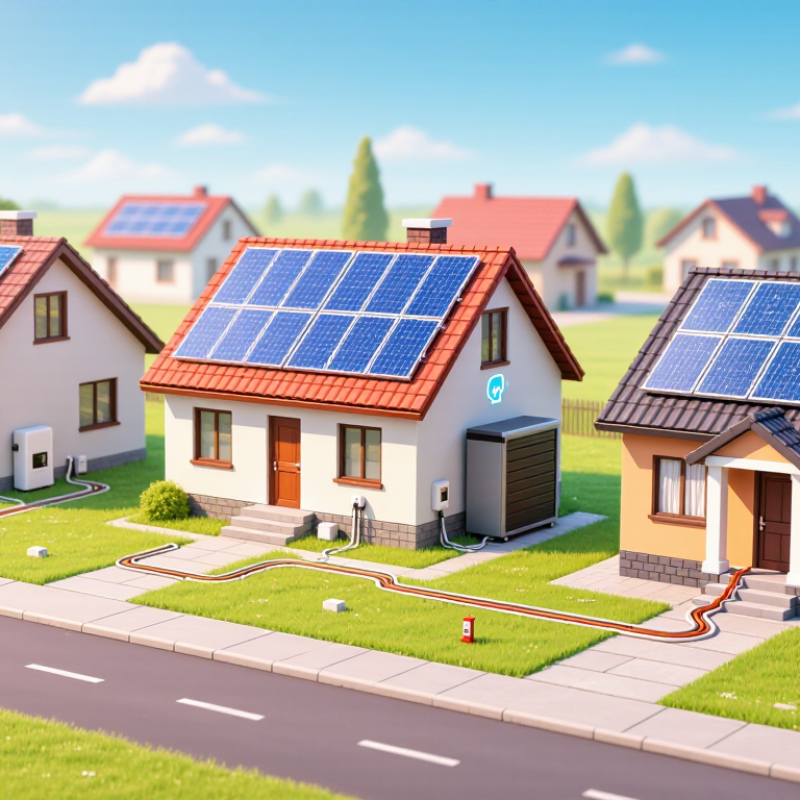
How On-Grid Solar Systems Connect to the Utility Network
An on-grid solar system works alongside the utility network, rather than storing every unused kilowatt-hour at home. Solar panels produce direct-current electricity, and an inverter converts it into alternating current that matches the grid’s voltage and frequency. A bidirectional meter records electricity imported from the network and, where permitted, electricity exported to it. The meter tells only part of the story.
When sunlight is strong, household appliances use solar power first; surplus may flow through the meter to the grid. At night or during cloudy weather, the home draws power from the utility. This connection is more than a cable: grid-interactive inverters monitor electrical conditions and stop exporting during a grid outage, helping protect utility workers. A rooftop system without approved backup equipment usually will not power the home during an outage. That surprises some owners.
The scale is substantial. IEA PVPS’s Snapshot of Global PV Markets 2024 estimates that worldwide solar photovoltaic capacity reached about 1.6 terawatts by the end of 2023, after roughly 447 gigawatts were added that year. These figures describe the broader PV market, not only rooftop systems, but they show why safe grid coordination matters. Export rules, metering arrangements, and compensation vary by utility area. A simple diagram can make connection look effortless; in practice, settings and local network limits can change what a system exports. One detail is easy to miss.
What Are the Top Types of On-Grid Solar Systems? — How On-Grid Solar Systems Connect to the Utility Network
| System Type | Main Components | How It Connects to the Utility Network | Typical Energy Flow | Backup During a Grid Outage | Common Considerations |
|---|---|---|---|---|---|
| String-Inverter Grid-Tied System | Solar panels connected in strings to one central inverter; utility-interconnection equipment. | The inverter converts the panels’ DC electricity to grid-compatible AC and connects to the building’s electrical service panel. | Solar power serves on-site loads first; surplus may flow to the grid, subject to local interconnection and compensation rules. | Usually no. Standard grid-tied inverters shut down during an outage to prevent energizing utility lines. | Often a straightforward option for roofs with similar panel orientation and limited shading. |
| Microinverter Grid-Tied System | Small inverters installed at individual panels or small panel groups, plus grid-interconnection equipment. | Each microinverter converts DC to AC near the panels; the AC circuits connect to the building’s electrical system and the utility service. | Panel-level AC production supplies the building, with any permitted excess exported through the meter. | Usually no, unless the system includes specifically designed and approved backup equipment. | Panel-level operation can help limit the effect of shading or differing panel orientations; equipment and installation costs vary. |
| Power-Optimizer System with String Inverter | Panel-level DC power optimizers paired with a central string inverter. | Optimizers condition panel output; the central inverter converts the combined DC power to AC and connects to the building’s grid-tied electrical system. | Solar electricity supplies on-site demand first; excess can be exported where allowed by the utility and local rules. | Typically no without a compatible, approved backup configuration and the required isolation equipment. | Can improve panel-level monitoring and manage mismatch between panels; optimizers do not by themselves provide outage backup. |
| Grid-Connected Hybrid System with Battery | Solar panels, a hybrid inverter or inverter system, battery storage, and grid-interconnection and isolation equipment. | The system can exchange power with both the utility and battery. Approved controls manage charging, discharging, imports, and exports. | Solar can serve loads, charge the battery, or export permitted surplus; the grid can supply loads or charge the battery when configured and allowed. | Potentially. Backup is available only if the system is designed for it, with suitable transfer/isolation equipment and supported loads. | Backup duration depends on battery capacity, power limits, system design, and household demand. Export and operating rules vary by location. |
Important: Grid interconnection requirements, export compensation, metering arrangements, and outage-backup rules vary by utility and jurisdiction. A standard grid-tied solar inverter normally disconnects during a utility outage unless an approved backup design safely isolates the system from the grid.