China Top 10 Inverter Voltage Stabilizer Manufacturers?
Chinaโs Inverter Voltage Stabilizer market includes manufacturers serving homes, workshops, commercial buildings, and industrial sites. Choosing among the top 10 requires more than comparing catalog prices. Buyers should examine input-voltage range, output accuracy, rated capacity, overload behavior, cooling design, and service support. A unit protecting a CNC machine may face different demands from one supplying a rural home with fluctuating mains power.
An Inverter Voltage Stabilizer combines voltage regulation with inverter-based power conversion. That distinction matters when loads include sensitive control boards, pumps, or equipment with sharp starting currents. Check the specification plate against the actual load, not just its advertised maximum. Ask how the product performs during sustained low voltage, sudden surges, and repeated switching. Also look for test reports, warranty terms, and clear installation guidance. Details matter.
A useful selection principle is: โMatch the stabilizer to the real load profile, not the most impressive number on the brochure.โ This is an editorial summary, not a verified quotation from a named industry expert; adding an unverified attribution would weaken trust. Even so, the point is practical. A small compressor starting beside a control cabinet can expose sizing errors quickly. Manufacturer claims deserve scrutiny, too. This guide compares ten manufacturers through product range, technical evidence, application fit, and support availability. No single brand suits every site, and public specifications may not answer every question. A careful shortlist still needs verification with the supplier.
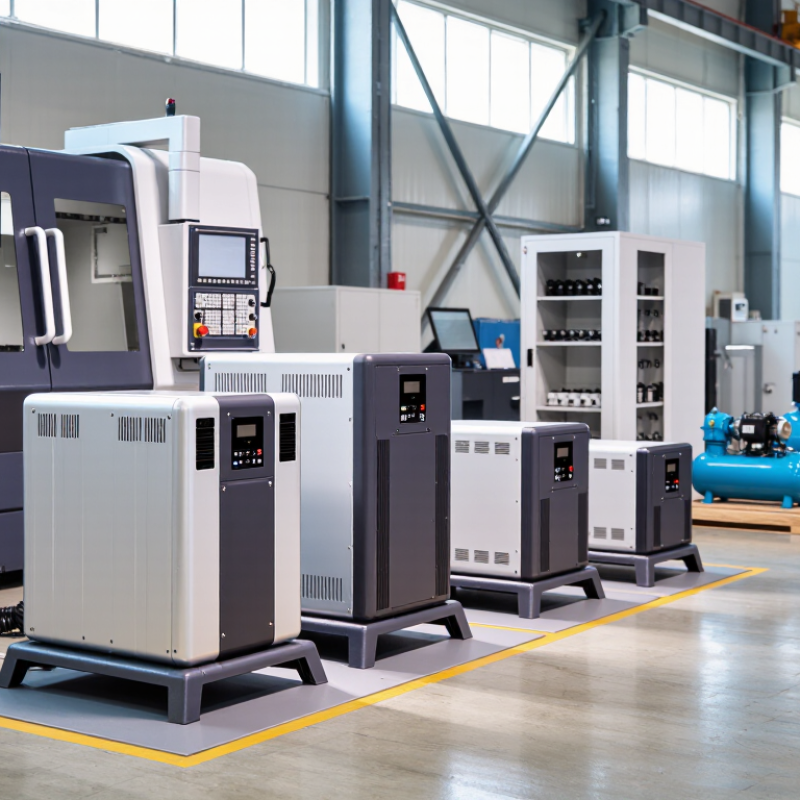
What Is an Inverter Voltage Stabilizer and How Does It Work?
An inverter voltage stabilizer helps keep electrical output near a usable voltage when the incoming supply rises or falls. It senses changes in the input, converts incoming AC power into DC, then uses an inverter circuit to produce controlled AC output. A feedback circuit continually checks the output and adjusts switching to correct deviations. In practice, this can help protect sensitive equipment from unstable supply, such as lights flickering or a motor struggling to start. Not magic.
Unlike a basic stabilizer, an inverter-based design can regulate output electronically rather than relying only on mechanical switching. Its performance depends on the design, rated capacity, and connected load. A small unit may not handle a refrigeratorโs startup surge, even if its running wattage seems adequate. Check both the load rating and the applianceโs starting demand. Install the stabilizer in a dry, ventilated location, and leave space around its vents. A technician can verify wiring, grounding, and output voltage with suitable test equipment. One detail is easy to overlook: not every model provides backup power during an outage. That depends on whether it includes a battery and charging system. A careful load assessment matters more than assumptions based on the word โinverter.โ
Key Types and Applications of Inverter Voltage Stabilizers
Inverter voltage stabilizers convert incoming AC power to DC, then create a controlled AC output through an inverter. A feedback circuit monitors voltage and adjusts switching several times per cycle. Response can be fast. Unlike older relay-based units, many designs avoid frequent mechanical switching. That can reduce wear, though cooling fans and electronic components still need maintenance.
Common types include double-conversion units, which continuously process power, and static inverter-assisted models, which correct voltage electronically. Some hybrid designs use a buck-boost stage for smaller changes and inverter support for deeper dips. Their actual operating range depends on the design, not just the product label. A small caveat.
These stabilizers suit equipment that reacts poorly to voltage swings, such as laboratory instruments, telecom racks, CNC controls, and sensitive office systems. In a workshop, steadier output may help a controller avoid nuisance resets during a nearby motor start. It will not automatically solve every power problem. Check load size, startup current, waveform quality, and heat around the unit before selecting capacity. A tidy specification sheet can still miss real operating conditions; measuring the load over a normal workday is often more useful.
How to Evaluate Inverter Voltage Stabilizer Manufacturers in China
When evaluating inverter voltage stabilizer manufacturers in China, start with the intended load, not the catalogue headline. A workshop motor, a server rack, and a precision instrument behave differently during voltage dips. Ask for the input-voltage range, output accuracy, response time, and rated capacity under your actual operating conditions. A large kVA figure alone proves little.
Request test records for overload response, temperature rise, and operation at low input voltage. Check whether the manufacturer explains capacity derating in hot rooms or with non-linear loads. Useful evidence includes test procedures, serial-number traceability, and clear product specifications. A polished brochure is not proof. Sometimes, the missing detail matters most.
Visit the production site if practical, or request a live video inspection of assembly and testing areas. Look for consistent wiring, labeled test equipment, and documented final checks. Ask how faults are diagnosed and how quickly replacement parts can be supplied. Compare warranty terms carefully; vague wording creates avoidable delays. One limitation deserves attention: factory claims may not match performance at your site. Before ordering in volume, test a sample with representative equipment and record voltage readings during startup and load changes.
Profiles of 10 Notable Chinese Inverter Voltage Stabilizer Manufacturers
Chinaโs inverter voltage-stabilizer manufacturers are better compared by application than by a simple ranking. The China Electricity Council reported national electricity consumption of 9.85 trillion kWh in 2024, up 6.8% year on year. That scale makes voltage quality important across factories, data rooms, and infrastructure. It does not, by itself, prove a supplierโs performance. Ask for test conditions, not just catalogue figures.
Ten useful manufacturer profiles cover distinct needs. Industrial servo-control makers emphasize response speed and overload tolerance. Precision-focused makers serve laboratories and sensitive instruments. UPS-integrated suppliers combine backup power with voltage regulation. Modular-system makers offer easier capacity expansion. Rail-infrastructure specialists design for vibration and demanding duty cycles. Data-center suppliers prioritize continuous operation and service access. Renewable-energy makers address fluctuating input conditions. Heavy-industry suppliers target dusty, high-load environments. Export-oriented manufacturers often provide broader voltage configurations. Custom-build specialists adapt enclosures and controls to site constraints. These are capability profiles, not a verified ranking of named firms. During factory evaluation, inspect wiring, cooling paths, and alarm records; paper specifications can hide practical weaknesses. A small detail matters. Ask for a witnessed load test and confirm local maintenance support before choosing.
China Top 10 Inverter Voltage Stabilizer Manufacturers? - Profiles of 10 Notable Chinese Inverter Voltage Stabilizer Manufacturers
The profiles below describe common product and application segments in Chinaโs voltage-stabilizer market. They are not ranked or attributed to specific manufacturers; product availability and specifications vary by supplier and model.
| Profile | Typical product focus | Common technology | Typical applications | Key selection checks |
|---|---|---|---|---|
| 01 โ Servo-controlled stabilizer specialist | Automatic voltage regulation for single- or three-phase loads | Motor-driven variable transformer with control circuitry | Workshops, commercial buildings, and general industrial equipment | Input range, correction speed, output accuracy, overload capacity, and maintenance access |
| 02 โ Static stabilizer specialist | Fast voltage correction for loads sensitive to voltage variation | Power-electronic switching, commonly using thyristors or other solid-state devices | Automation systems, control equipment, and selected production lines | Response time, waveform quality, cooling, bypass arrangement, and fault protection |
| 03 โ Relay-type stabilizer supplier | Compact, cost-conscious voltage regulation for lighter loads | Relay-switched transformer taps and electronic control | Small offices, retail equipment, and household appliances | Load type, switching steps, noise, rated capacity, and expected switching life |
| 04 โ Three-phase industrial stabilizer supplier | Three-phase voltage regulation for machinery and plant loads | Servo or static regulation, depending on model and application | Machine tools, pumps, compressors, and manufacturing facilities | Phase balance, neutral requirements, motor starting current, and total load kVA |
| 05 โ Single-phase stabilizer supplier | Single-phase regulation across a range of compact and higher-capacity units | Relay, servo, or electronic designs | Homes, offices, retail premises, and individual equipment circuits | Rated voltage and frequency, load inrush, installation environment, and protection features |
| 06 โ CNC and machine-tool application supplier | Stabilization packages selected for machine-tool power requirements | Industrial servo or static designs, with configuration dependent on the machine | CNC equipment, machining centers, and precision production machinery | Peak demand, drive and spindle loads, grounding, harmonics, and the machine makerโs requirements |
| 07 โ HVAC and building-services supplier | Voltage regulation for building equipment and motor-driven loads | Commonly servo-based; exact topology depends on the product range | HVAC systems, ventilation, water pumps, and building services | Motor starting, continuous duty, ventilation, ambient temperature, and service support |
| 08 โ Laboratory and test-equipment supplier | Regulated supply for test benches and sensitive electrical equipment | Static or servo systems; some applications may instead require a precision AC source | Laboratories, inspection areas, and equipment testing | Accuracy, distortion, transient response, calibration needs, and whether stabilization alone is sufficient |
| 09 โ Custom-engineered project supplier | Application-specific systems configured for site conditions and load profiles | Technology selected to suit capacity, response, and installation requirements | Industrial projects, distributed facilities, and sites with wide voltage fluctuation | Site survey, single-line diagram, load study, protection coordination, and commissioning scope |
| 10 โ OEM and export-oriented supplier | Products configured for OEM integration or destination-market requirements | Varies by model; may include relay, servo, or static products | Equipment builders, distributors, and international projects | Applicable standards, documentation, labeling, test reports, warranty, and spare-parts availability |
Specification note: stabilizer performance is model-specific. Confirm rated capacity, input-voltage range, output tolerance, response time, efficiency, protection functions, and applicable certifications with the supplier before purchase.
How to Compare Suppliers, Certifications, and After-Sales Support
When comparing inverter voltage stabilizer suppliers, look beyond rated capacity. Ask for input-voltage range, regulation accuracy, overload behavior, and test conditions. A 20 kVA label says little without the load profile behind it. Request test reports, not just certificate images. IEC 61000-4-11 covers immunity testing for voltage dips and interruptions; it is not, by itself, proof that a stabilizer meets every safety requirement. Check which product model and test scope each document covers. Small detail. It matters.
After-sales support deserves the same scrutiny as specifications. Ask for a written response-time target, local spare-parts availability, warranty exclusions, and commissioning guidance. A clear escalation path can matter when a production line stops at night. The IEAโs 2023 report, Electricity Grids and Secure Energy Transitions, says annual grid investment needs to rise from about USD 300 billion to more than USD 600 billion by 2030. That wider pressure makes reliable power equipment and maintainable systems increasingly important, though it does not prove one supplier is better. Compare several suppliers using the same load data, site voltage records, and service questions. I would still verify references directly; paperwork can look stronger than real support.
China Top 10 Inverter Voltage Stabilizer Manufacturers? How to Compare Suppliers, Certifications, and After-Sales Support
Start by checking that a stabilizerโs rated voltage matches the destination market. The chart shows representative nominal single-phase mains voltagesโnot supplier ratings.
China commonly uses 220 V, IEC-based systems use 230 V, the United States uses 120 V, and Japan uses 100 V nominal single-phase supply. Actual supply ranges can vary. After confirming voltage compatibility, compare documented product certifications, warranty terms, spare-parts availability, and after-sales response arrangements. Verify the applicable local requirements before purchase.