2026 Top Solar Panel Grants How Do Global Buyers Qualify?
In 2026, solar panel grants may help households, farms, and businesses reduce the cost of clean energy projects. Yet global buyers cannot assume that every program offers direct cash payments. Some schemes provide rebates, tax credits, low-interest financing, or support for battery storage instead. The difference matters.
Eligibility often depends on location, income, property ownership, system size, and installer certification. A homeowner in Ontario may need utility approval before installation, while a small business in Kenya could face different documentation requirements. Rural projects may receive priority. Imported equipment can also require approved technical standards, warranty evidence, and local inspection.
Check official government portals.
Reliable applicants should compare the grant authority, application deadline, funding limit, and payment schedule. An experienced installer can explain panel output, roof condition, inverter capacity, and expected annual savings. However, installer advice should not replace independent verification. Some claims may sound attractive but remain unsupported by public records.
This guide examines how global buyers can assess solar panel grants in 2026 without relying on vague promises. It considers common qualification rules, required documents, regional differences, and practical mistakes that delay approval. Requirements can change quickly. That is easy to overlook. Therefore, applicants should confirm current terms with the responsible government agency or utility before purchasing equipment. A careful application may begin with a simple step: saving the official program page as a PDF. Even then, uncertainty remains, especially where funding is limited or programs close early.
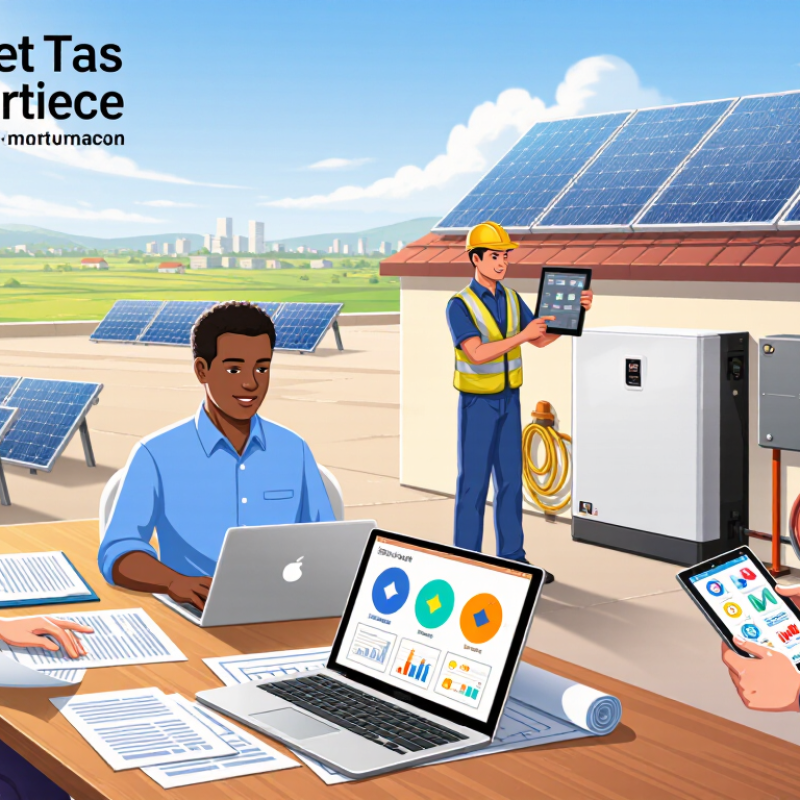
2026 Grant Map: Compare the U.S. 30% ITC, EU Funds, and Asian Schemes
2026 Top Solar Panel Grants: How Do Global Buyers Qualify?
The 2026 grant map is uneven, but the direction is clear. IRENA reported 585 GW of renewable capacity additions in 2024, with solar contributing about 452 GW. The IEA expects solar PV to provide nearly 80% of global renewable growth through 2030. Buyers should treat these figures as market signals, not automatic funding promises.
In the United States, the 30% Investment Tax Credit can support eligible solar projects under current clean-energy rules. Full value may require prevailing-wage and apprenticeship compliance. Project owners should document labor records, equipment invoices, commissioning dates, and domestic-content details. Transfer options may improve cash flow, but tax eligibility still needs professional review. Small errors can become expensive.
European applicants usually face country-specific calls under recovery funds, innovation programs, and regional budgets. A project may need measurable emissions reductions, grid evidence, and a clear construction schedule.
Asian schemes differ sharply. Some prioritize rural access, rooftop systems, or local manufacturing, while others use auctions instead of grants. The Asian Development Bank’s clean-energy financing data shows that blended public and private capital remains important across emerging markets. Eligibility is rarely based on panel price alone. It may depend on location, ownership, grid connection, labor standards, and reporting capacity. The map helps, but it is not perfectly comparable.
Eligibility Step 1: Match Buyer Type, PV Size, and Local Grant Rules
2026 Top Solar Panel Grants: How Do Global Buyers Qualify?
Eligibility Step 1 is matching buyer type, PV size, and local grant rules. A household system may qualify under residential funding, while a warehouse project needs commercial eligibility. Public buildings, farms, and community projects often use separate application categories. Location matters more than passport. Many programs require the property, meter, and tax records to sit inside the funding area.
PV size can decide approval. A 6 kW rooftop system may fit a household cap, but a 500 kW installation could require commercial permits, grid studies, and competitive selection. Check the grant’s maximum capacity, battery rules, export limit, and installation deadline before requesting quotations. Some schemes fund equipment only. Others cover design, wiring, or approved labor. The wording is rarely identical.
Data supports this careful approach. IRENA’s Renewable Capacity Statistics 2024 recorded about 473 GW of new renewable capacity worldwide in 2023, including roughly 346 GW of solar. The IEA’s Renewables 2024 report identifies solar PV as the leading source of new renewable growth through 2030. Yet market growth does not guarantee individual eligibility. Some rules remain unclear.
A reliable application file should include ownership proof, recent utility bills, a site plan, system capacity, installer credentials, and grid-connection evidence. In practice, buyers often confuse a tax incentive with a direct grant. That mistake can distort budgets. Grant portals also change quietly, and older guidance may remain online. Recheck every condition with the local authority before signing a purchase contract.
Eligibility Step 2: Confirm IEC 61215/61730 Compliance and Bankability
For 2026 solar grant applications, buyers should verify more than a certificate number. IEC 61215 confirms design and performance qualification under environmental stress. IEC 61730 addresses module safety, including insulation, fire, and mechanical risks. Ask for complete test reports from an accredited laboratory, not a cropped certificate. Check the exact model, revision, materials, and production site.
This matters as global deployment accelerates. The IEA PVPS Trends 2024 report recorded about 456 GW of new photovoltaic capacity in 2023, taking global capacity beyond 1.6 TW. Greater scale also increases scrutiny. Grant reviewers and lenders often examine degradation assumptions, warranty terms, factory quality controls, and traceable serial records. Bankability is not created by IEC compliance alone.
Review independent inspection results and historical field data. Compare the declared annual degradation rate with third-party evidence. A product may pass laboratory testing yet face weak documentation or inconsistent production. That gap is easy to miss. IRENA’s Renewable Power Generation Costs in 2023 report showed utility-scale solar costs falling to roughly USD 0.044 per kWh, increasing pressure for reliable long-term output. Buyers should document every verification step, while admitting one uncomfortable point: certification reduces technical uncertainty, but it never removes project risk.
2026 Top Solar Panel Grants: How Do Global Buyers Qualify?
Eligibility Step 2: Confirm IEC 61215/61730 compliance and bankability. The chart shows the publication year of core IEC photovoltaic module standards used to evaluate design qualification and safety qualification evidence.
Buyers should request current certificates and accredited laboratory reports covering IEC 61215 and IEC 61730, then review warranty terms, production traceability, insurance coverage, financial stability, and long-term service capability before treating a supplier as bankable.
Funding Step 3: Benchmark Requests Against IRENA’s 1,865 GW Solar Base
Global buyers should compare grant requests with credible solar deployment data. IRENA’s 1,865 GW solar base offers a useful reference point for market scale. It does not guarantee approval. It also does not define one universal funding limit. Applicants must still follow each program’s location, income, technology, and ownership rules.
A practical review begins with the project’s capacity, cost, and expected output. For example, a 5 MW request should explain land size, panel quantity, grid access, and annual generation. The budget should separate equipment, installation, storage, maintenance, and contingency costs. Reviewers may question inflated prices or generation estimates. Independent resource studies and recent supplier quotations can strengthen the file.
The benchmark needs context. A country with limited grid capacity cannot absorb every proposed project. A smaller rural installation may create more measurable social value than a larger urban request. Buyers should document local jobs, electricity savings, emissions reductions, and community access. Data quality matters.
A weak application can still look polished.
Some assumptions deserve challenge. Solar output changes with dust, shading, weather, and maintenance quality. Currency movements may also distort the final budget. Applicants should show sensitivity calculations instead of presenting one perfect forecast. IRENA’s figure helps frame ambition, but site evidence and transparent records determine credibility.
Application Step 4: Prove Costs, Supply Chains, Labor, and Deadlines
Application Step 4 is where a promising solar grant application becomes verifiable. Global buyers must prove every major cost, not merely submit a quotation. Include itemized panels, inverters, mounting systems, freight, insurance, taxes, installation, and contingency reserves. IRENA’s Renewable Power Generation Costs in 2023 reported utility-scale solar electricity at about USD 0.044 per kilowatt-hour, showing why reviewers examine inflated budgets carefully.
Keep evidence connected.
Attach signed supplier quotations, payment schedules, shipping estimates, and foreign-exchange assumptions. A procurement file should identify manufacturing countries, processing locations, transport routes, and expected delivery dates. The IEA’s Renewables 2024 analysis expects solar PV to provide most new renewable capacity through 2030, increasing pressure on supply chains and delivery certainty. One missing origin certificate can weaken an otherwise strong application.
Labor evidence also matters. Provide contractor agreements, payroll records, worker training logs, safety procedures, and site staffing forecasts. The International Labour Organization links decent-work systems with stronger renewable-energy growth, but many applications treat labor as a vague line item. That is a mistake.
Show who installs each array and when. Match invoices with milestones, inspections, and commissioning records.
Grant deadlines need exact time zones, not informal calendar notes. Add procurement lead time, customs delays, and testing windows.
My own review habit is imperfect: I sometimes trust a clean spreadsheet too quickly. Recheck the numbers against bank records, shipping documents, and field capacity.
Related Posts
-
What is the Best Way to Find Solar Panel Grants?
-
How to Secure Solar Panel Grants for Your Home Energy Needs
-
Innovative Solutions for Harnessing Energy with Photovoltaic Tiles
-
Ultimate Guide to Choosing the Best Solar Roof Tiles for Your Home
-
Exploring the Future of Solar PV Tiles at the 138th Canton Fair in China 2025
-
Ultimate Guide to Maximizing Energy Efficiency with Solar Thermal Panels in Your Home